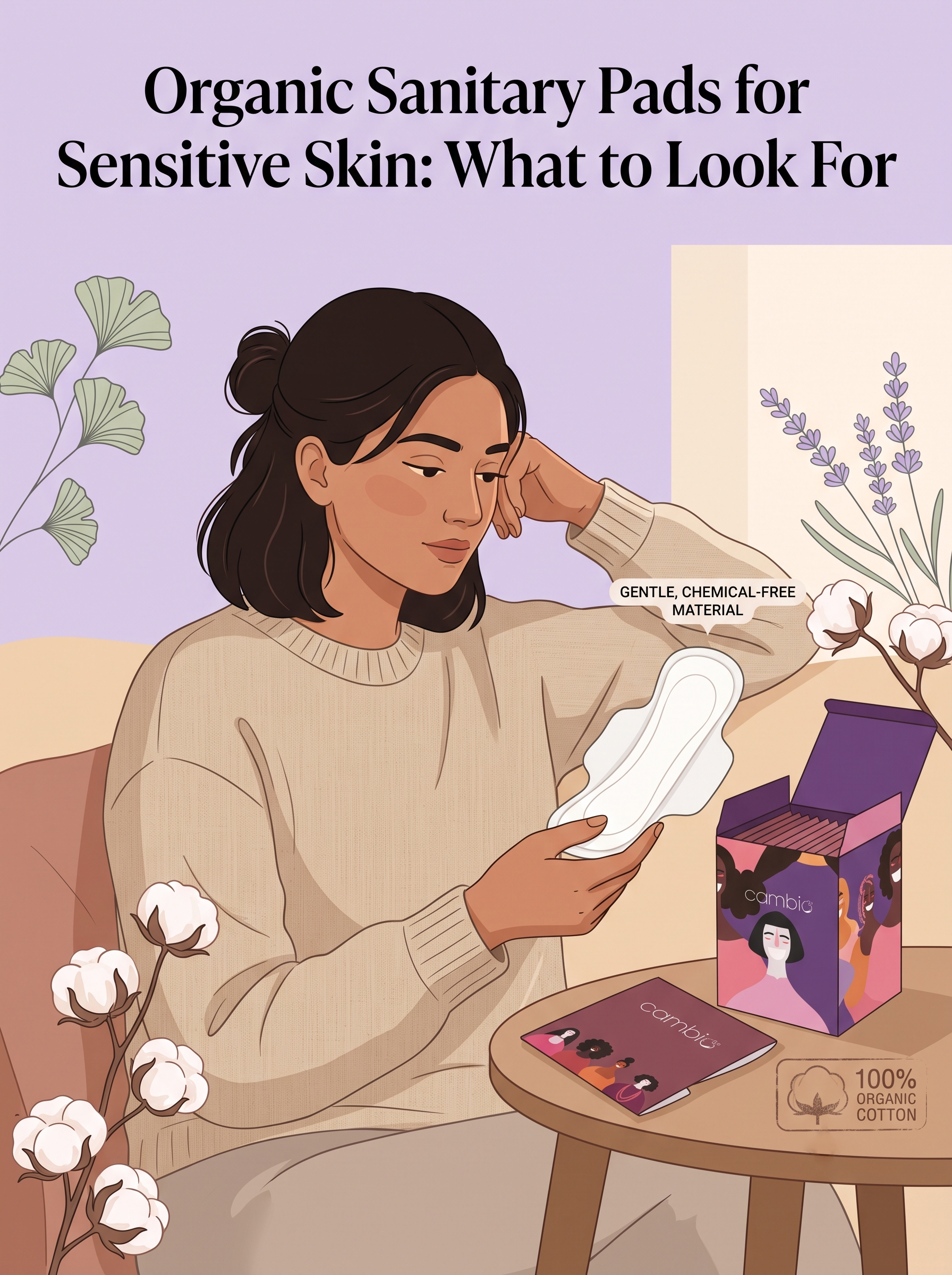



When shopping for period products, you may see labels such as “chemical-free,” “organic,” “natural,” “fragrance-free” and “plastic-free.” They can sound similar, but they do not mean the same thing. If you are searching for chemical-free sanitary pads in India, the most useful first step is to understand exactly what each claim tells you—and what it leaves out.
No sanitary pad should be judged by one phrase on the front of the pack alone. Materials, fragrance, product construction, stated testing and the scope of any certification can all matter. This guide explains what to check so you can compare products using clear information rather than broad marketing promises.
What Does “Chemical-Free” Mean on Sanitary Pads?
In scientific terms, materials are made of chemicals, so “chemical-free” is not a precise description of a finished product. On a sanitary pad pack, the phrase may be intended to communicate that certain substances or additives are not used. But unless the manufacturer explains the claim, it does not tell you which substances are excluded or whether the statement applies to the whole pad or only one component.
Instead of relying on a general “chemical-free” label, look for specific information. Does the product say it is fragrance-free? Does it identify the material used for the skin-contact layer? Does it name substances it has tested for or intentionally excludes? Is a certification mentioned, and can you verify what it covers?
Which Materials Should You Check in a Sanitary Pad?

A disposable sanitary pad is made of multiple layers. The top sheet touches the skin; the absorbent core helps manage menstrual flow; the back sheet helps reduce leakage; and adhesive helps keep the pad in place. Different products may use different materials in these layers, so a description of one layer should not automatically be treated as a description of the entire pad.
Reference: UNICEF — Technical specification for disposable sanitary pads.
The skin-contact layer
Check whether the brand identifies the material used on the top sheet. Some products use cotton or organic cotton in this layer, while others use different fibres. “Cotton” and “organic cotton” are not interchangeable claims; look for precise product information.
The absorbent core
The absorbent section may use cellulose-based materials or other absorbent components. If the manufacturer publishes a material breakdown, read it rather than assuming the whole pad is made from the same fibre as its top sheet.
The leak-resistant backing and adhesive
These components serve practical functions but may be made from materials different from the top layer. If you want to avoid or reduce specific materials, look for full-product details rather than relying on a front-of-pack phrase.
Fragrance and deodorising additives
If you prefer to avoid added scent, look specifically for “fragrance-free” or “unscented” wording and check product details. “Chemical-free” does not necessarily tell you whether fragrance has been added.
Chemical-Free, Organic, Fragrance-Free and Plastic-Free: Are They the Same?
No. These terms describe different things, and one does not automatically prove another.
- Chemical-free: A broad, imprecise phrase unless the brand explains which substances are excluded.
- Organic: Usually refers to specified materials or fibres and the way they are sourced or certified. It does not automatically mean every layer is organic.
- Fragrance-free: Indicates that fragrance has not been added according to the product’s claim. Check the label and manufacturer’s explanation.
- Plastic-free: A claim about the product’s materials. Check whether it applies to the entire pad, individual components, and/or packaging.
- Biodegradable: An environmental claim that needs clear scope and supporting evidence. Organic does not automatically mean fully biodegradable.
How to Read Sanitary Pad Labels Before Buying in India
Use this quick checklist when comparing sanitary pads online or in a store:
- Read the full product description, not just the headline claim.
- Check which material is used for the top sheet and whether the information covers the whole pad or only one layer.
- Look for clear fragrance or deodorant information if you prefer an unscented product.
- If a brand mentions a test, approval or certification, check the named organisation, the scope and whether the claim can be verified.
- Check size and absorbency options and choose according to your flow and routine.
- Read disposal instructions and do not assume that a product is compostable or biodegradable unless the claim is clearly supported.
- If the details you need are missing, contact the manufacturer before making a decision.
Which Sanitary Pads Are Safe to Use in India?
There is no single product label that proves a sanitary pad is the best or safest choice for every person. A sensible approach is to choose a product from a source that provides clear product information, follow its use instructions, and pay attention to how it works for you. Claims such as “organic,” “natural” or “chemical-free” should not be treated as a guarantee that a product can never cause discomfort.
For general menstrual-health context, see WHO — Menstrual health.
If a pad repeatedly causes itching, burning, redness or other symptoms, stop using the suspected product and consider getting medical advice, especially if symptoms persist, recur or are accompanied by pain, sores or unusual discharge. Symptoms can have causes beyond the pad itself.
What About Organic Sanitary Pads?
Organic sanitary pads may appeal to people who prefer particular fibres or want clearer information about sourcing. However, “organic” and “chemical-free” are not interchangeable. Check which component is described as organic, what the product is made from overall, and whether any certification applies to the specific product and materials.
For a broader comparison of material types, read CambioWoman’s guide to Organic Sanitary Pads vs Regular Sanitary Pads.
If your main concern is fragrance or skin discomfort, see Are Scented Pads Bad For You?
How to Explore CambioWoman Pads

If you are considering CambioWoman pads, review the current product page for material details, available sizes and absorbency options, and any testing or certification information relevant to the product. Read the wording carefully and verify what each claim covers instead of assuming that one label describes every component.
Explore CambioWoman Organic Cotton Pads to review the current product details, sizes and absorbency options.
Browse the Menstrual Hygiene Products collection to review available period-care options.
Product-specific statements should be checked against current packaging and supporting documentation before publication.
Frequently Asked Questions
Which sanitary pads are chemical-free?
“Chemical-free” is not a precise scientific description. Look for clear information about materials, fragrance and specific substances the manufacturer says it excludes.
Which sanitary pads are safe to use in India?
Compare transparent material information, use instructions, size and absorbency, and verifiable testing or certification details. No broad label guarantees that a product suits everyone.
Are organic sanitary pads completely chemical-free?
No product should be described that way simply because it is organic. Organic claims usually relate to specified materials or sourcing; check the full composition and the scope of any certification.
Are plastic-free sanitary pads better?
That depends on your priorities and the actual product. Verify whether the plastic-free claim applies to the whole pad or only selected components, and consider absorbency, comfort and disposal too.
Do fragrance-free pads contain no chemicals?
No. Fragrance-free means fragrance has not been added according to the product claim; it does not mean the product contains no chemicals.
How can I know if a sanitary pad claim is genuine?
Look for a specific, clearly explained claim, named testing or certification details where applicable, and supporting documentation. Contact the manufacturer if the information is unclear.
For more practical questions about sanitary-pad use, sizes and disposal, visit our Sanitary Pads FAQs.
Conclusion
When you see “chemical-free sanitary pads” on a search result or product pack, treat it as a prompt to look closer—not as proof by itself. Check the materials used in different layers, fragrance information, the exact scope of organic or plastic-free claims, and any testing or certification details. Clear product information helps you make a more informed choice than a broad label ever can.