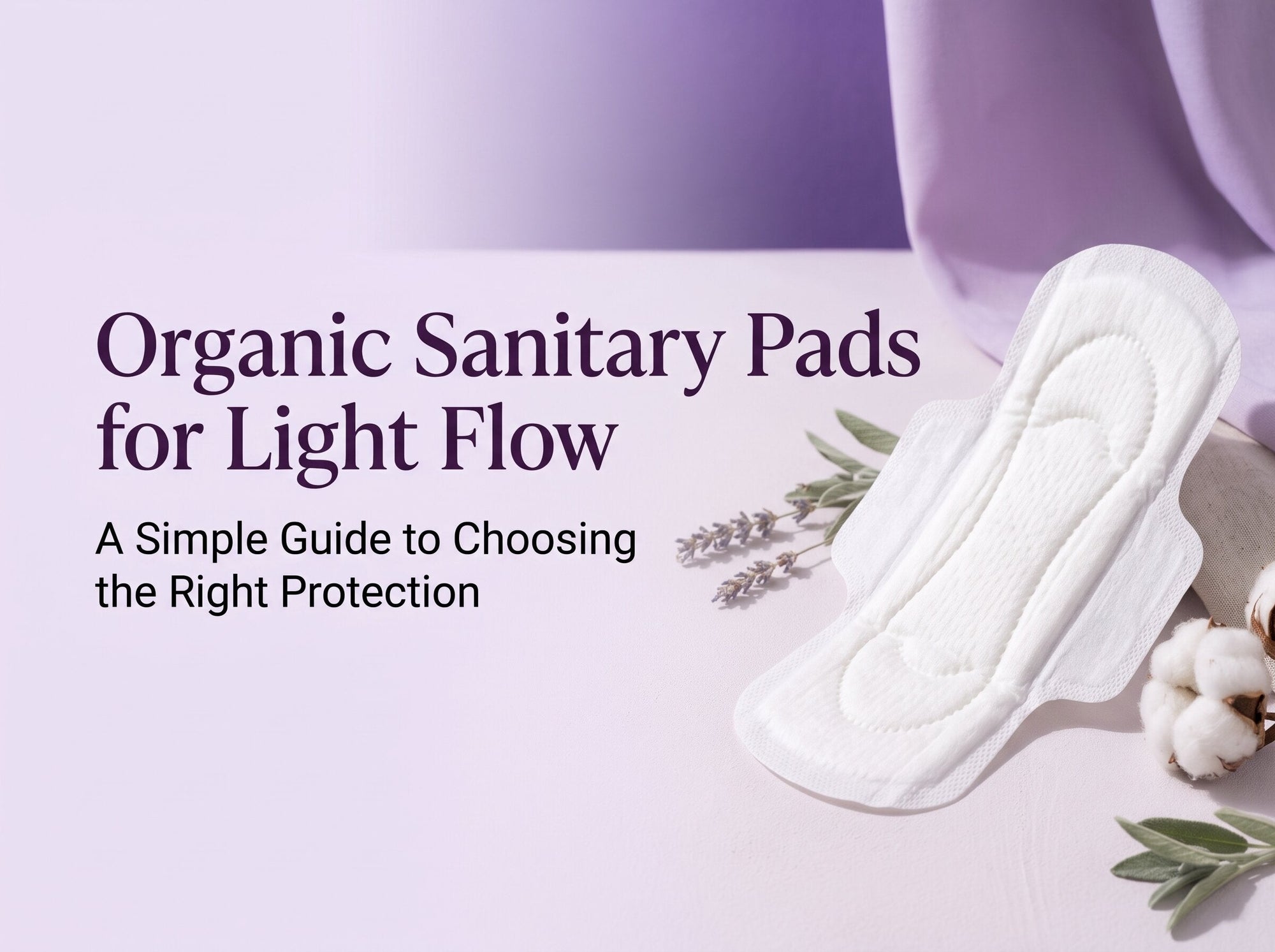





A comfortable night during your period often starts with choosing a pad that suits your flow, underwear and sleeping habits. If you prefer organic sanitary pads, you may be wondering whether they can also provide the coverage you need overnight.
The short answer is: an organic sanitary pad may be suitable for overnight use if its size, absorbency, shape and fit work for your flow. The word “organic” alone does not tell you how much fluid a pad can absorb or whether it will stay in place while you sleep. Those details deserve just as much attention.
This guide explains what to check when choosing organic sanitary pads for overnight use, how to reduce avoidable leaks and why a longer pad should not be treated as permission to wear it for the entire night without changing.
1. What Makes a Pad Suitable for Overnight Use?
At night, you may stay in one position for several hours, turn from side to side or sleep on your back or stomach. A pad needs to suit both your menstrual flow and the way you move while sleeping. Consider these practical features:
- Length and coverage: A longer pad can provide more coverage, especially towards the back. Check the actual length in millimetres rather than relying only on labels such as “night”, “maxi” or “XL”.
- Absorbency information: Look for clear information about the flow level the product is designed for. “Extra long” and “high absorbency” are not automatically the same thing.
- Shape and wings: A shape that fits your underwear and wings that fasten securely may help the pad stay positioned. A pad that shifts can leak even when it has enough absorbent material.
- Adhesive and backing: The adhesive should hold the pad in place on your underwear. The backing is intended to help prevent fluid from passing through the underside, but performance varies by product.
- Comfort and skin-contact material: Check what the top sheet is made from, whether fragrance is added and whether the product information explains the materials used in its different layers.
No pad can promise a leak-free night for every person. Flow, fit, movement and how full the pad becomes all matter.

2. Does “Organic” Mean Better Overnight Protection?
Not by itself. “Organic” usually refers to a claim about a particular material or fibre. It does not automatically describe the pad’s absorbency, length, leak-resistant backing, adhesive or overall construction.
A disposable pad can contain several layers, such as a skin-contact top layer, a transfer layer, an absorbent core, a leak-resistant backing and adhesive. The materials used in those layers can differ. If the organic claim matters to you, check exactly which part of the product it applies to and look for clear product documentation.
For overnight use, assess two separate questions: “Do I understand the material claim?” and “Does this pad provide the coverage and absorbency I need?” One answer cannot replace the other.
For broader material and buying advice, read How to Choose Organic Sanitary Napkins: A Practical Guide for Indian Women.
3. How to Choose the Right Length and Absorbency
Start with your usual flow pattern. Some people have heavier bleeding at the beginning of their period and lighter flow later. You may therefore prefer different pad sizes on different nights.
- Light flow: A shorter or lighter option may be enough if it provides comfortable coverage for your body and underwear.
- Moderate flow: Compare regular and longer options, and check the product’s stated absorbency and dimensions.
- Heavy flow: A longer pad with a suitable absorbency level may offer more coverage. If you repeatedly soak through pads quickly, do not rely only on a larger size—consider speaking with a healthcare professional.
- Leakage towards the back: You may prefer a pad with more rear coverage. Fit and placement matter; a longer pad is not a guarantee against leaks.
Do not assume that two brands use the same meaning for “overnight”, “extra-long” or “heavy flow”. Compare the measurements and instructions on the actual pack or product page.
For general selection advice, see How To Choose The Right Sanitary Pad For You.
4. What to Check on an Organic Pad Label or Product Page
Before buying, look for information that answers these questions:
- What material is used on the skin-contact surface?
- What does the organic claim apply to—the top sheet, the cotton used, or another specified component?
- Is the pad scented or fragrance-free?
- What are the pad’s length and shape? Are wings included?
- Does the brand provide absorbency information or test details?
- Are usage, changing and disposal instructions easy to find?
If the product page does not explain a detail that matters to you, ask the brand rather than assuming. Clear answers are more useful than broad phrases such as “natural”, “pure” or “all-night protection”.
5. A Simple Night-Time Routine to Help Manage Leaks
A few practical habits can make period nights easier, although they cannot guarantee that leaks will never happen.
- Put on a fresh pad shortly before going to bed.
- Position it centrally in your underwear and secure the wings, if present, according to the product instructions.
- Choose underwear that holds the pad comfortably in place without feeling too tight.
- Keep a spare pad and underwear nearby if your flow is heavy or unpredictable.
- Change the pad when you wake up, or sooner if it feels wet, full or uncomfortable. Follow the product’s instructions and do not extend wear time simply because a pad is labelled overnight.
UNICEF’s product information says disposable pads should be disposed of after a maximum of four to six hours of use. Guidance can vary by product and source, so follow the pad manufacturer’s instructions and change it sooner when needed. A longer night-time pad does not mean it should be worn beyond the recommended time.
6. When Night-Time Leakage Keeps Happening
Occasional leakage can happen, especially on heavier-flow days or when a pad does not fit your underwear well. If it happens repeatedly, review the pad’s length, absorbency, placement and fit. You may need to change your pad more often or use a different size that better matches your flow.
If you regularly need to change a pad every one to two hours, bleed through clothing or bedding, or find that heavy periods are affecting daily life, speak with a healthcare professional. The NHS identifies needing to change a pad or tampon every one to two hours as a sign of heavy periods worth discussing with a clinician.
For broader practical advice, read How to avoid period leaks: Back, Front, and Side Protection.
7. Exploring CambioWoman Organic Cotton Pad Options
CambioWoman’s Organic Cotton Pads product page lists multiple size options, including Light Flow (245 mm), Medium Flow (280 mm), Heavy Flow (330 mm) and Extra Heavy Flow (420 mm). Review the current product page for the latest size, material, usage and availability information before choosing an option for night-time use.

A longer size may offer more coverage, but choose according to your own flow, fit and comfort. Do not assume that a size label alone guarantees a full night without leakage. Check the product instructions and change the pad at the recommended interval.
Explore the current options on the CambioWoman Organic Cotton Pads product page, or browse the wider Menstrual Hygiene Products collection.
A Quick Checklist Before You Buy
- I checked the actual pad length in millimetres.
- I understand the stated absorbency or intended flow level.
- I checked whether the pad has wings and whether its shape suits my underwear.
- I know which part of the pad the organic material claim applies to.
- I checked whether fragrance is added and reviewed the usage instructions.
- I understand that a longer pad does not mean I can ignore recommended changing times.
Frequently Asked Questions
Can I use organic sanitary pads overnight?
Yes, if the pad’s length, absorbency, fit and instructions suit your flow. The word “organic” alone does not establish overnight performance.
Are organic sanitary pads better for overnight use?
Not automatically. Organic material claims and overnight absorbency are different things. Compare the full product specifications, including size, absorbency, shape and backing.
What length sanitary pad is best for sleeping?
There is no single best length for everyone. Compare the pad’s measurement in millimetres, your flow, underwear fit and where you need coverage.
Can a longer pad prevent period leaks at night?
A longer pad may provide more coverage, but it cannot guarantee leak prevention. Flow, fit, placement, movement and changing frequency also matter.
How often should I change an overnight sanitary pad?
Follow the manufacturer’s instructions and change it sooner if it feels full, wet or uncomfortable. UNICEF says disposable pads should be used for a maximum of four to six hours.
What should I look for in organic night pads?
Check the exact material claim, skin-contact layer, fragrance information, length, absorbency details, wings, backing and usage instructions.
Conclusion
Organic sanitary pads can be one option for night-time period care, but the right choice depends on more than the word “organic”. Look at the pad’s length, absorbency, shape, fit and material information, and follow its changing instructions. A pad that suits your body and flow is more useful than a broad promise on the front of a pack.