

Getting your first period—or learning how to manage periods at school, during sports and at home—can bring plenty of questions. Choosing a sanitary pad should not add to the confusion. Teenagers may see products described as organic, cotton, natural, ultra-thin, extra-long or suitable for sensitive skin, but it is not always clear what those words mean.
Organic sanitary pads can be an option for teenagers who prefer products made with specified organic materials. However, “organic” alone does not tell you whether a pad will fit comfortably, absorb a particular flow or suit every person. It is worth checking the full product information before choosing.
This guide explains what teenagers and parents can look for when comparing organic sanitary pads, how to choose a practical size, and what everyday period-care habits can make managing periods easier.
1. What Does “Organic” Mean on a Sanitary Pad?
The word “organic” generally refers to how a particular material, such as cotton, has been grown or certified. On a sanitary pad, the claim may apply to one component rather than every layer of the finished product. Disposable pads can contain several parts, including a top sheet, absorbent core, transfer layer, backing and adhesive.
That is why it helps to read the product description carefully. Check whether the brand explains which part uses organic material and whether it provides details about the other layers. Do not assume that a pad labelled organic is made entirely from organic cotton or contains no other materials.
A useful rule: look for specific material information rather than relying on words such as “natural” or “pure” without an explanation.
2. Are Organic Sanitary Pads a Good Option for Teenagers?
They may be an option if a teenager prefers the stated materials and finds the pad comfortable. But there is no single type of pad that is best for every teenager. Age alone does not determine which pad to use; flow, underwear fit, comfort, availability and personal preference matter.
Organic does not automatically mean safer, more absorbent, irritation-free or better for every skin type. Compare the product’s full construction and instructions. If a particular pad causes itching, burning, rash or discomfort, stop using it and consider seeking advice from a healthcare professional if symptoms persist.
3. How to Choose the Right Pad Size and Absorbency
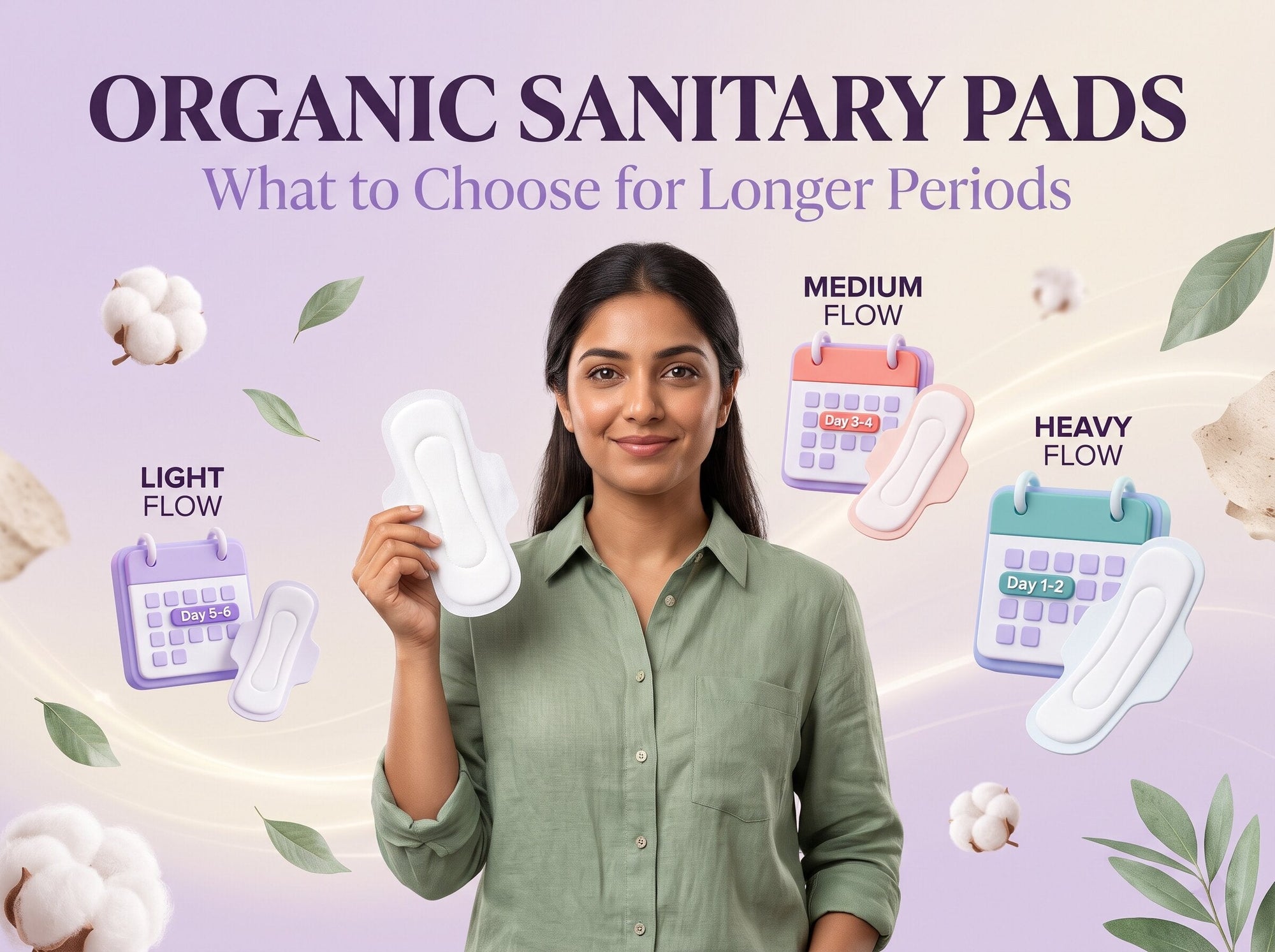
For someone new to periods, a simple starting point is to choose a pad that feels manageable and matches the flow. Product labels such as regular, large, XL, heavy flow or overnight are not perfectly standardised across brands, so check dimensions and the brand’s own guidance.
- Light flow: A smaller or lighter pad may be suitable when bleeding is light, provided it offers enough coverage.
- Moderate flow: Compare regular-size options and check the stated absorbency and length.
- Heavier flow: A longer or higher-absorbency pad may be more practical. Change it as needed and follow the product instructions.
- School or travel: Some teenagers prefer keeping a few individually wrapped pads and spare underwear in a small pouch.
A pad should sit comfortably in the underwear and stay in place. If it feels bulky, rubs, shifts or does not provide enough coverage, try a different size or shape.
4. What Should Teenagers Check on the Product Label?
Before choosing a pack, read the information on the wrapper or product page. These checks can help teenagers and parents compare products without being misled by marketing language.
- Material details: What is the skin-contact layer made from? Which component is described as organic?
- Fragrance: Is the product scented or does it contain deodorising ingredients? If fragrance tends to irritate the user, consider an unscented option.
- Size: Check the actual length and shape rather than choosing by age.
- Absorbency: Look for the product’s intended flow level and usage guidance.
- Wings and adhesive: Check whether wings are included and whether the pad is designed to fit the underwear being worn.
- Instructions: Read how often the pad should be changed and how to dispose of it.
If a product description is unclear, ask the brand for a material breakdown. A responsible product page should help shoppers understand what they are buying.

5. Helping a Teenager Feel Prepared at School
A little preparation can make periods feel less stressful. Parents and caregivers can help a teenager put together a small period kit without making it feel like a big or embarrassing event.
- Keep two or three spare pads in a discreet pouch.
- Include a spare pair of underwear and a small disposal bag if useful.
- Show how to open the wrapper, position the pad and secure the wings, if present.
- Explain where used pads can be wrapped and disposed of at school.
- Encourage the teenager to ask a trusted adult, school nurse or healthcare professional if they are unsure or worried.
The first period can arrive unexpectedly. Talking about periods before they begin can help a young person recognise what is happening and know where to find support. For more conversation guidance, see UNICEF Parenting — Talking about periods at home.
6. Basic Period Hygiene and Changing Pads
Wash hands before and after changing a pad. Change it regularly, and sooner if it becomes wet, full or uncomfortable. Follow the instructions on the product packaging rather than keeping a pad on for longer because it is described as long-lasting.
Wrap used disposable pads before placing them in an appropriate bin. Do not flush sanitary pads down the toilet. Access to a private toilet, water, soap and disposal facilities also matters; menstrual hygiene is not only about the product itself.
If reusable cloth products are considered instead, they need to be washed and dried completely according to their care instructions. This article focuses on disposable organic-labelled pads, but teenagers should have accurate information about all available options.
For general hygiene information, see CDC — Healthy Habits: Menstrual Hygiene.
7. When Should a Teenager Ask for Health Advice?
Periods can vary, especially in the first years after menstruation begins. However, a teenager should speak with a healthcare professional or trusted adult if bleeding is very heavy, pain is severe, periods are repeatedly causing missed school or daily activities, or there are other worrying symptoms.
For example, needing to change a pad every one to two hours because it is soaked is a reason to seek medical advice. A clinician can assess the situation rather than assuming it is simply part of starting periods.
8. A Note for Parents: Make the Choice a Conversation
A teenager may have preferences about pad thickness, length, wings, packaging or how discreet a product feels. Instead of choosing based only on age or marketing claims, involve them in comparing the options. Explain the product label in simple language and let comfort and practical needs guide the decision.
It is also important not to make a teenager feel that one product is compulsory. The aim is to help them manage periods comfortably, hygienically and with confidence.
9. Exploring CambioWoman Organic Cotton Pads
If you are considering CambioWoman, review the current Organic Cotton Pads product page for its material description, available sizes, usage instructions and other product details. Check the current information directly before deciding whether a particular size is suitable for a teenager.

A product’s organic or cotton-related claim should be understood in the context of its full construction. Choose based on the teenager’s flow, fit and comfort rather than assuming that one product or size suits everyone.
Explore the product details on the CambioWoman Organic Cotton Pads page, and browse the wider menstrual hygiene collection if you want to compare available options.
Quick Checklist for Teens and Parents
- I checked which part of the pad the organic claim applies to.
- I reviewed the top-sheet and other material information.
- I checked the pad length and absorbency guidance.
- I considered whether fragrance or deodorising ingredients are included.
- I chose a size that fits comfortably in the underwear.
- I read the changing and disposal instructions.
- I know where to get help if periods are painful, very heavy or worrying.
Frequently Asked Questions
Are organic sanitary pads suitable for teenagers?
They can be an option for teenagers who prefer the stated materials and find the pad comfortable. Check the full product details, fit, absorbency and instructions.
Which sanitary pad is best for a teenage girl?
There is no universal best pad. Choose one that matches the teenager’s flow, fits their underwear, feels comfortable and has clear usage instructions.
Can a teenager use organic cotton pads for her first period?
A teenager can consider a pad if its size and absorbency suit the flow and it is comfortable to use. Explain how to position, change and dispose of it.
Are organic pads safer than regular pads?
The word organic does not automatically establish that a finished pad is safer or better for everyone. Compare the full material information and avoid unsupported safety claims.
Should teenagers use scented or unscented pads?
If fragrance causes irritation or discomfort, an unscented product may be preferable. Check the ingredient and product information.
How often should teenagers change sanitary pads?
Change pads regularly and sooner when wet, full or uncomfortable. Follow the product instructions and maintain hand hygiene.
What should parents keep in a first-period kit?
A few pads, spare underwear, a small pouch and disposal bags can be useful. Explain how to use the products and where to ask for help.
Conclusion
Choosing organic sanitary pads for teenagers does not need to be complicated. Start with clear material information, then compare size, absorbency, fit, fragrance details and changing instructions. Parents can make the process easier by answering questions calmly and letting the teenager take part in the choice. The best option is one that meets the young person’s practical needs and helps them manage periods with comfort and confidence.