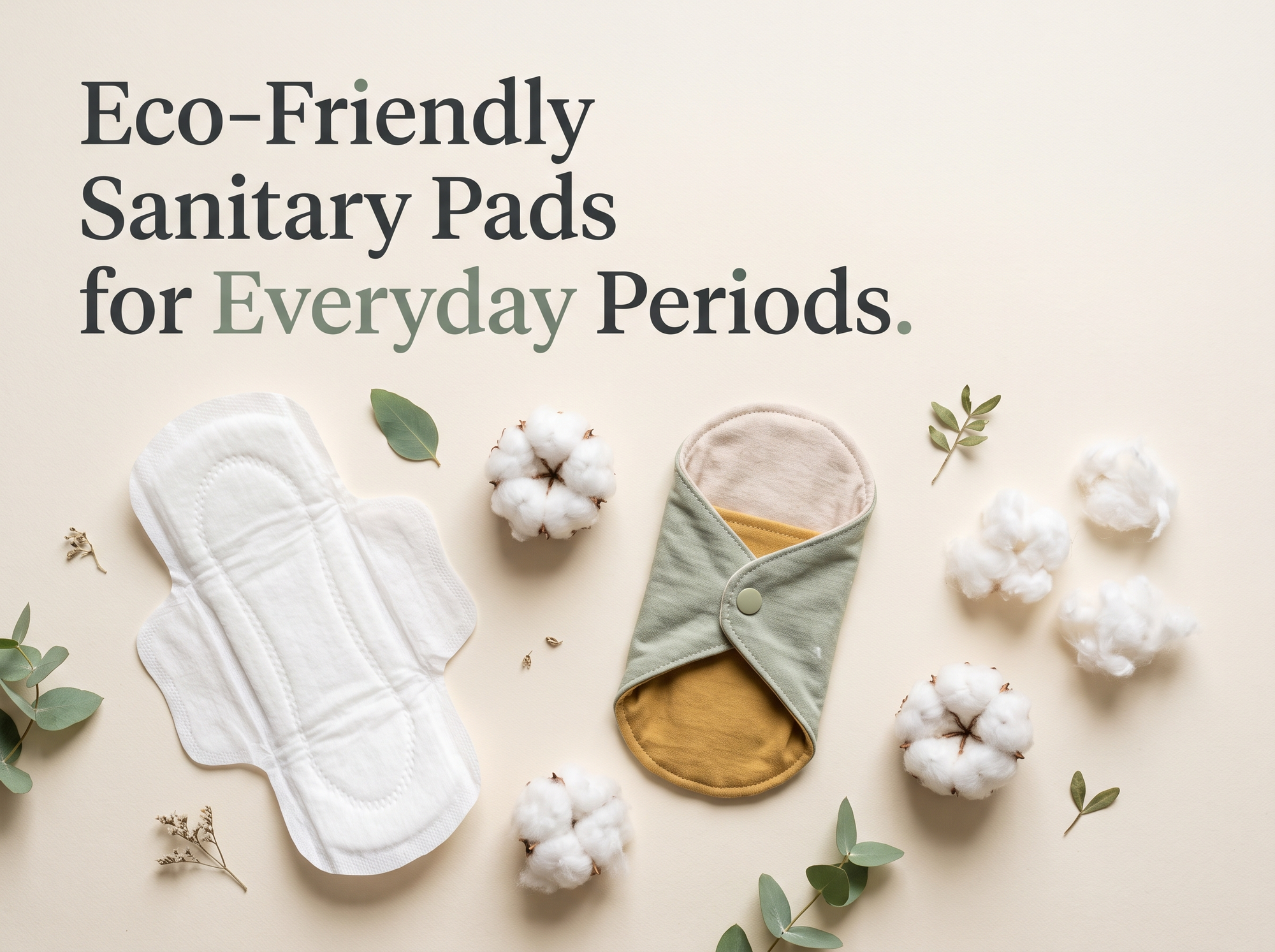






If you are looking for biodegradable sanitary napkins in India, you may come across labels such as “biodegradable,” “compostable,” “organic,” “plant-based” and “plastic-free.” These terms can sound interchangeable, but they describe different things. A pad may contain a plant-based or organic material without the entire product being biodegradable under everyday conditions.
The useful question is not simply whether a pack says “eco-friendly.” It is what the claim covers, what evidence supports it, and what the product needs after use. This guide explains how to compare biodegradable sanitary pads without relying on vague environmental promises.
What Does Biodegradable Mean for Sanitary Pads?
Biodegradable means a material can be broken down by microorganisms under suitable conditions. The time and extent of breakdown can depend on the material, temperature, moisture, oxygen, microorganisms and disposal environment. A claim that one component is biodegradable does not automatically mean the complete sanitary pad will break down in the same way.
Disposable pads contain several components, which may include a skin-contact layer, absorbent core, leak-resistant backing, adhesive and wrapper. These parts may use different materials. Check whether a claim applies to the top sheet, the absorbent core, the whole pad or only its packaging.
Biodegradable, Compostable, Organic and Plastic-Free: What’s the Difference?
- Biodegradable: Describes the ability of a material to break down biologically under specified conditions. Ask what conditions and timeframe the claim refers to.
- Compostable: Means suitable for a defined composting process under relevant conditions. Do not assume a pad can go in a home compost bin unless the manufacturer explicitly confirms this.
- Organic: Usually relates to sourcing or production of specified materials, such as organic cotton. It does not prove every part of the finished pad is biodegradable.
- Plant-based: Describes the source of one or more materials. It does not prove that the whole product will biodegrade.
- Plastic-free: Check whether the claim covers the entire pad, backing, adhesive, individual wrapper and outer packaging.
- Eco-friendly: A broad phrase. Look for specific information rather than treating it as proof of biodegradability.

How to Check If a Sanitary Pad Is Really Biodegradable
Before buying biodegradable sanitary napkins, use this checklist:
- Read the full product description, not just the front-of-pack claim.
- Check whether the claim applies to the whole pad, one layer or packaging only.
- Look for a stated test method, standard or independent third-party certification where applicable.
- Check the conditions required for breakdown, such as industrial composting or a controlled environment.
- Look for a clear timeframe and supporting evidence instead of accepting “decomposes quickly.”
- Ask the manufacturer about the absorbent core, backing, adhesive and wrapper if details are missing.
- Read disposal instructions and check whether your local waste system can handle the product as intended.
UNICEF’s technical specifications for reusable menstrual pads state that biodegradability or composting claims should be accompanied by independent third-party certification under applicable standards. Reusable and disposable pads are different categories, so do not present that specification as a universal rule for every disposable pad; it is a useful reminder to look for evidence behind environmental claims.
Are Biodegradable Sanitary Pads Better for the Environment?
They may offer environmental advantages when their materials and disposal pathway are genuinely suited to the claim. However, the label alone cannot tell you the full environmental impact. Manufacturing, packaging, transport, product performance, the amount used and the waste-management system all matter.
A product that needs an industrial composting facility may not break down as intended in a landfill, drain or household compost bin. Likewise, a pad made with an organic fibre may still contain other components that need separate consideration. Compare the complete product and its end-of-life instructions, not just one material.
For a broader overview, read CambioWoman’s Environmental Impact of Disposable Period Products.
How Should You Dispose of Biodegradable Sanitary Pads in India?
Do not assume that a biodegradable label means a used sanitary pad can be flushed, buried, burned or placed in a home compost bin. Used pads contain menstrual fluid and should be handled hygienically. Follow the manufacturer’s instructions and your local municipal waste guidance.
Central Pollution Control Board guidance has advised wrapping used sanitary waste securely and placing it in the waste stream designated by local authorities. Waste rules and collection systems can change, so check the latest instructions from your municipality or waste collector.
For practical disposal steps, read CambioWoman’s existing guide: How to Dispose of Sanitary Pads.
What About Organic Cotton Sanitary Pads?

Organic cotton may be used in a pad’s skin-contact layer or another specified component. But organic and biodegradable are separate claims: the first concerns the material’s sourcing or production, while the second concerns how a material breaks down under stated conditions.
If comparing organic cotton pads, check which part is made from organic cotton, what the other layers contain, and whether an environmental claim covers the complete product. Do not assume “organic” means fully plastic-free, compostable or biodegradable.
Explore CambioWoman Organic Cotton Pads and review the current product information before deciding whether they fit your priorities.
Browse the Menstrual Hygiene Products collection to compare available period-care options.
Are Biodegradable Sanitary Pads Safe and Reliable?
Environmental claims alone do not establish comfort, absorbency or safety. As with any disposable pad, consider fit, absorbency for your flow, material information, product instructions and relevant quality or testing details.
The Bureau of Indian Standards lists IS 5405:2025 for disposable sanitary napkins and related products. This product specification is not proof that every product carrying a “biodegradable” claim is compostable or that all components break down under all conditions. Check current product-specific information and applicable requirements.
Frequently Asked Questions
Are sanitary pads biodegradable?
It depends on the product and its components. Some materials may be biodegradable under specified conditions, while other layers, adhesives or packaging may not be. Check whether the claim covers the complete pad.
Which biodegradable sanitary pads are available in India?
Compare clear material descriptions, evidence for the biodegradability claim, conditions required for breakdown and disposal instructions. Do not choose based only on “eco-friendly.”
Are organic sanitary pads always biodegradable?
No. Organic and biodegradable describe different things. Check the complete product composition and the scope of each claim.
Can biodegradable sanitary pads be composted at home?
Not necessarily. Some products require controlled or industrial composting. Use home composting only if the manufacturer explicitly says the complete product is suitable.
Can I flush biodegradable sanitary pads?
Do not flush ordinary disposable sanitary pads. Follow the product instructions and local disposal guidance.
How can I verify a biodegradable claim?
Look for the scope of the claim, test method or standard, independent certification where applicable, conditions and timeframe for breakdown, and supporting documents.
Conclusion
Choosing biodegradable sanitary napkins in India starts with checking the details behind the label. Find out whether the claim covers the whole pad, what materials are used, which conditions are needed for breakdown, and how the used product should be disposed of. Organic, plant-based, plastic-free, biodegradable and compostable are not interchangeable terms. Clear evidence and realistic disposal instructions are more useful than broad environmental promises.