



Choosing eco-friendly sanitary pads for everyday periods is not only about finding a product with a green label. It is about understanding what a pad is made from, how it is used, what happens after use, and whether the option fits your body, budget and daily routine. A product that sounds sustainable on the pack may still need closer checking, while a reusable option may not suit every living situation.
There is no single menstrual product that works best for everyone. This guide explains the main options, what to check before buying, and how to make a practical choice without relying on vague environmental claims.
What Does “Eco-Friendly” Mean for Period Products?
“Eco-friendly” is a broad description, not a guarantee that a product has no environmental impact. A useful comparison looks at the materials used, how often the product needs replacing, its packaging, how it is manufactured, and the local options for washing or disposing of it.
Disposable pads are convenient and widely available, but each use creates waste. Reusable cloth pads can reduce the number of disposable products thrown away, but they need suitable washing, thorough drying and clean storage. Some disposable products are marketed as organic, plant-based, plastic-free or biodegradable; these terms describe different features and should not be treated as interchangeable.
For more context, read about the environmental impact of disposable period products.
WaterAid India’s report on informed product choice and disposal compares disposable, compostable-disposable and reusable menstrual products. It is a useful reminder that sustainability depends on both the product and the conditions in which people can use and manage it.
Disposable or Reusable: Which Fits Everyday Life?
The most practical choice depends on your routine. Consider these differences before deciding:
- Disposable sanitary pads: Convenient when travelling, at school or work, or when you do not have reliable access to clean water and private washing facilities. Used pads still need hygienic disposal.
- Reusable cloth pads: Can be washed and used repeatedly, potentially reducing the number of single-use products purchased. They require enough clean water, soap or suitable detergent, time to dry fully, and a clean place to store them.
- A mixed approach: Some people may prefer reusable products at home and disposable products when travelling or when washing facilities are limited. Your choice can change with your circumstances.
Reusable does not automatically mean practical for every person, and disposable does not automatically mean every product has the same environmental impact. Choose an option you can use hygienically and consistently.

What to Check When Buying Eco-Friendly Sanitary Pads
Use this checklist to look beyond the front of the package:
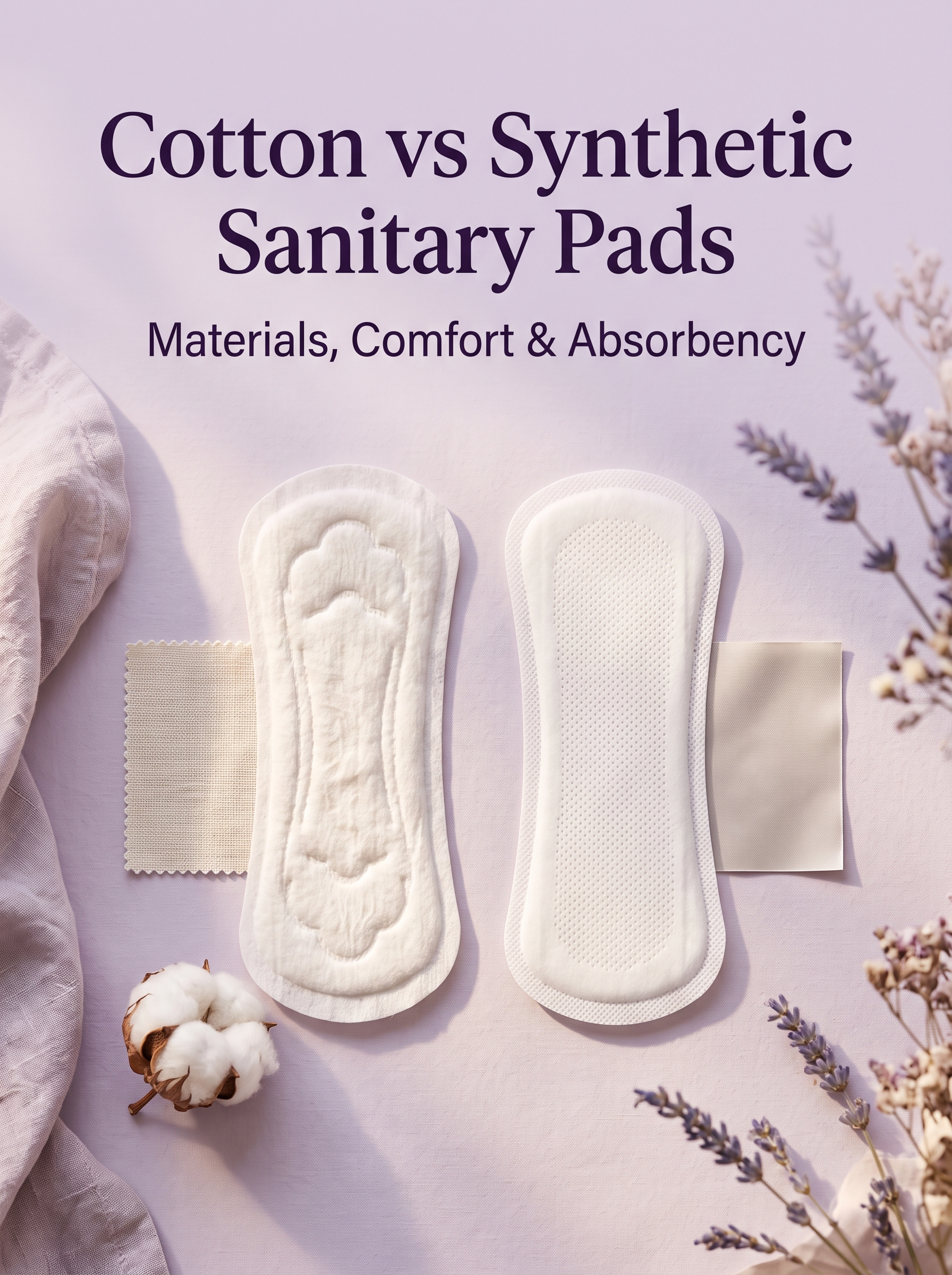
- Materials: Check whether the brand identifies the top sheet, absorbent core and leak-resistant backing. A claim about one layer does not necessarily describe the entire pad.
- Specific claims: “Organic,” “plant-based,” “plastic-free,” “biodegradable” and “compostable” mean different things. Look for precise wording and supporting documentation.
- Certification and testing: If a certification or environmental test is mentioned, verify the standard, issuing body and which parts of the product it covers. Do not assume that a certification for a raw material automatically applies to the finished pad.
- Packaging: Check whether the packaging claim applies to the outer pack, individual wrappers, or both.
- Absorbency and fit: Choose the size and absorbency suited to your flow and activities. A product’s environmental positioning does not tell you how well it will perform for you.
- Price and availability: Compare cost per pad or per use, pack quantity, availability in your area and whether you can obtain the product reliably.
- Disposal or care instructions: For disposable pads, follow local waste instructions and the product’s guidance. For reusable pads, follow the manufacturer’s washing, drying and storage instructions.
For background on product types and specifications, see UNICEF’s menstrual hygiene product information.
Are Organic Sanitary Pads Always Eco-Friendly?
Not necessarily. “Organic” usually refers to how a specified agricultural material is grown and verified under a relevant standard. It does not, by itself, tell you whether every layer of the finished pad is organic, plastic-free, biodegradable or compostable.
If organic materials are important to you, check exactly which component is described as organic and whether any certification applies to the fibre, processing or finished product. For environmental claims, look separately at the whole product construction, packaging and end-of-life instructions.
Can Biodegradable or Compostable Pads Go in Home Compost?
Do not assume that a product labelled biodegradable or compostable can be put into a home compost bin. The conditions required for breakdown can vary, and a claim may apply only to certain components or to a specified composting environment. Check the manufacturer’s evidence and instructions, and follow local waste-management guidance. Do not flush sanitary pads, whether conventional or marketed as eco-friendly.
The CPCB sanitary waste guidance (2018) provides background on sanitary waste management. Verify current municipal waste instructions before deciding how to dispose of a product.
Everyday Comfort and Hygiene Still Matter
Sustainability should not come at the expense of comfort or hygiene. Choose the right size and absorbency, change disposable pads regularly and sooner if saturated or uncomfortable, and follow the product instructions. Reusable pads should be washed and dried fully before being stored or used again.
If a product repeatedly causes irritation, stop using it and consider other possible causes, including friction, moisture, fragrance or an unrelated skin condition. Seek advice from a qualified healthcare professional if symptoms persist or are severe. No single material or environmental label guarantees that a product will suit everyone.
For more guidance on size and flow, read how to choose the right sanitary pad for you.
A Simple Way to Make a More Informed Choice
Before buying, ask yourself four questions:
- Can I use and change this product comfortably throughout my normal day?
- Do I understand what the product is made from and what its environmental claims actually cover?
- Can I wash reusable products properly or dispose of disposable products according to local guidance?
- Does the cost and availability work for me over time?
If the answers are clear, you are in a better position to choose a product based on real needs rather than a broad “green” label.
Where Can You Explore Menstrual Care Options?
If you are comparing menstrual products, review the current product description and material information before deciding what suits you. CambioWoman’s product and collection pages can help you review the available options; check the latest specifications and claims on the relevant page rather than assuming every product has the same materials or environmental properties.

Explore CambioWoman Organic Cotton Pads for the current product details, or browse the Menstrual Hygiene Products collection to view the available options.
Frequently Asked Questions
What are eco-friendly sanitary pads?
The term is broad and can refer to products that use particular materials, reduce some types of waste, or offer reusable or other end-of-life options. Check the exact product details instead of relying on the label alone.
Are reusable cloth pads better for the environment?
Reusable pads can reduce the number of disposable products thrown away, but their overall impact also depends on how long they are used, how they are washed and dried, and the resources available to the user.
Are organic sanitary pads automatically biodegradable?
No. Organic describes how a specified material is produced; biodegradability is a separate claim about breakdown under defined conditions.
Can eco-friendly sanitary pads be used every day of a period?
A product can be used according to its intended purpose and instructions, provided its absorbency, fit and care or disposal requirements suit your needs. Change disposable pads regularly and follow the manufacturer’s guidance.
Can biodegradable sanitary pads be flushed?
No. Do not flush sanitary pads. Follow the product instructions and local waste-management guidance.
How can I check if an eco-friendly claim is genuine?
Look for clear information about the materials, the part of the product covered by the claim, the relevant standard or independent test, and instructions for disposal or composting. If details are missing, ask the manufacturer.
Conclusion
Eco-friendly sanitary pads for everyday periods are best chosen by looking at the whole experience: materials, comfort, absorbency, cost, packaging, washing or disposal, and the evidence behind environmental claims. Disposable and reusable products each have practical considerations, and the right option depends on your circumstances. Read labels carefully, avoid assuming that terms such as organic and biodegradable mean the same thing, and choose a product you can use hygienically and confidently.