



When you shop for sanitary pads, the material can be just as confusing as the size or absorbency. One pack may highlight cotton, another may describe a soft or cotton-like surface, and another may use a smooth synthetic top sheet. It is natural to wonder whether cotton sanitary pads are better than synthetic pads — and what the difference means in everyday use.
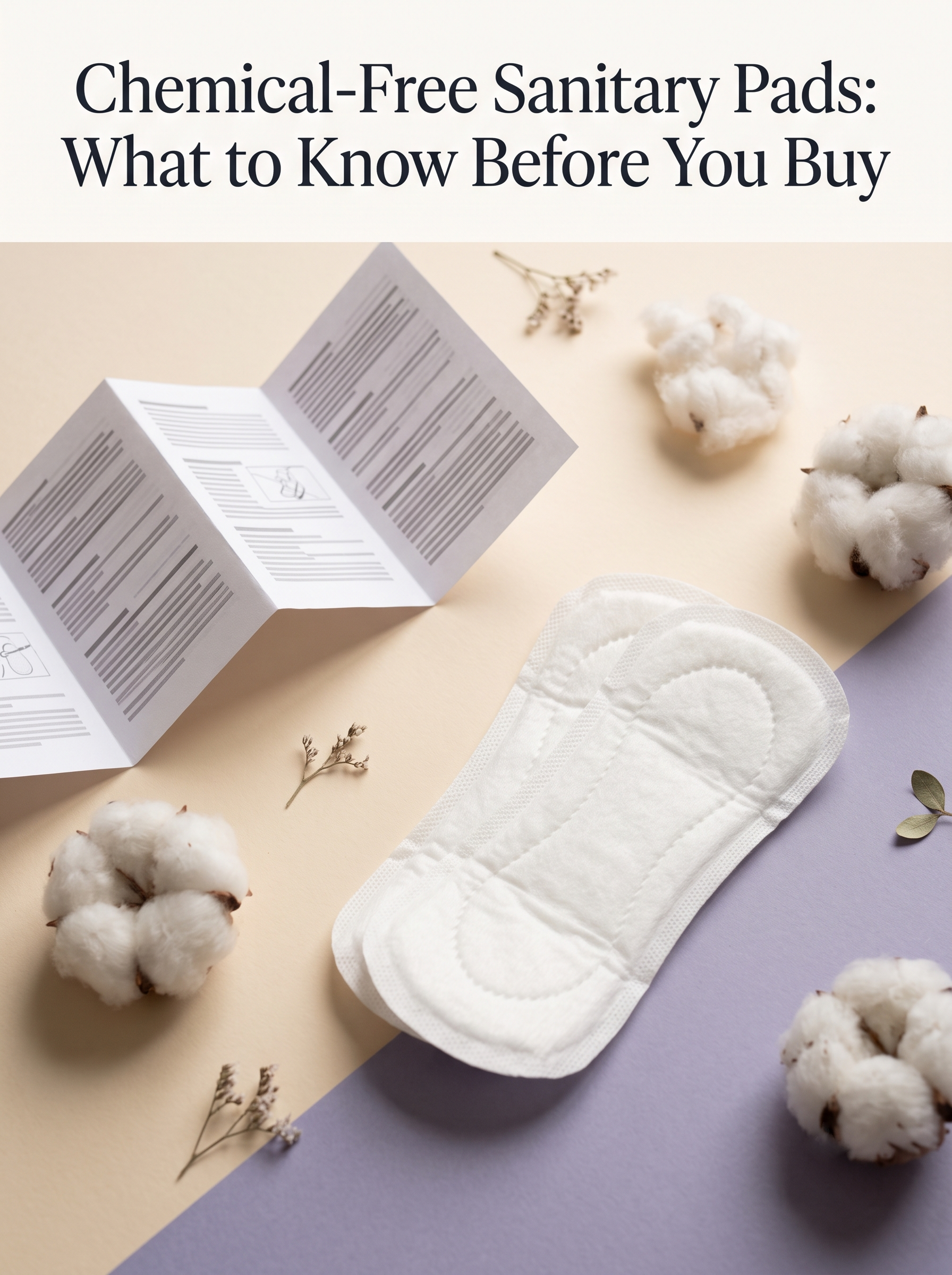
The first thing to know is that “cotton pad” and “synthetic pad” are not always two completely separate product categories. A disposable sanitary pad has several layers, and each layer has a job. A pad may use cotton or a cotton-containing material in the layer that touches the skin, while using other materials in its absorbent core or leak-resistant backing. The best comparison therefore starts with the actual materials listed for the whole product, not just the main phrase on the package.
This guide explains how cotton and synthetic materials can differ, what to consider for comfort and absorbency, and how to compare pads without assuming that one material is automatically best for everyone.
The short answer
Cotton may appeal to people who prefer a fabric-like skin-contact surface, while synthetic materials can be used to create smooth top sheets, fluid-transfer layers or leak-resistant backing. But the word “cotton” does not tell you how every layer is made, and “synthetic” does not by itself tell you whether a pad will be uncomfortable. Performance depends on the complete design, product quality, fit, flow and personal preference.
If you are comparing cotton sanitary pads vs synthetic pads, check these five things first: the top-sheet material, the absorbent core, the backing, the pad’s absorbency and fit, and any specific claims made on the packaging.
What is a cotton sanitary pad?
A cotton sanitary pad usually refers to a pad that uses cotton in a prominent part of its construction, often the surface that comes into contact with the skin. However, labels vary. Some products may use cotton in the top sheet, while others may contain cotton in only one component or use a cotton-like description for the feel of the surface.
Cotton is a natural fibre, but the word “cotton” alone does not confirm that the entire pad is made from cotton, that the cotton is organic, or that the finished product contains no synthetic components. If these details matter to you, look for a clear material breakdown and any relevant certification information.
What is a synthetic sanitary pad?
Synthetic materials can be used in different parts of disposable sanitary pads. Depending on the design, the top sheet, transfer layer, leak-resistant backing or other components may include manufactured fibres or polymers. These materials are used for particular functions, such as moving fluid through the pad, helping retain fluid, or limiting leakage onto clothing.
There is no single construction used by every brand. UNICEF’s technical specifications for disposable sanitary pads list multiple materials that may be used in different layers. That is why it is more accurate to compare specific product details than to assume that all synthetic pads are made in the same way.
Cotton vs synthetic pads: key differences

1. The layer that touches your skin
The top sheet is the part of the pad that sits closest to the skin. If you prefer the feel of cotton, check whether the product specifically identifies cotton in that layer. Do not rely on a vague “cottony soft” phrase alone to determine the fibre content.
Some people find one surface more comfortable than another; others do not notice a meaningful difference. If a pad repeatedly causes itching, burning or irritation, stop using the suspected product and consider other possible causes as well. A material label cannot guarantee that a product will suit every person.
2. Absorbency and leakage protection
Cotton is absorbent, but a pad’s overall performance is not determined by one fibre alone. The absorbent core, the way layers are arranged, the pad’s size and shape, and its leak-resistant backing all contribute to how it handles menstrual flow.
A synthetic component does not automatically mean a pad absorbs more, and a cotton surface does not automatically mean it absorbs less. Compare the manufacturer’s absorbency information, the pad’s intended flow level and how it performs for your needs. For heavier flow or overnight use, coverage and fit can matter as much as the surface material.
3. Softness, friction and comfort
Softness is partly a matter of surface texture and partly a matter of fit. A pad that bunches, shifts or rubs against the skin can feel uncomfortable regardless of whether its top layer contains cotton or synthetic material. The adhesive, wings, length and shape can affect how securely it sits in your underwear.
If comfort is your priority, look for clear material details and choose a size that stays in place. Terms such as “soft sanitary pads” and “comfortable sanitary pads” can help you find options to compare, but they are not a substitute for checking the product specifications and your own experience.
4. Breathability and moisture
“Breathable” is often used in product descriptions, but it should not be treated as a guaranteed property of every cotton-based product. The complete construction matters, including the top sheet, core and backing. A pad can feel damp or uncomfortable when it is saturated, poorly fitted or worn longer than is suitable for the person’s flow.
Change pads regularly and follow the instructions on the packaging. If you are prone to irritation, consider avoiding deodorant-containing or fragranced products. The American College of Obstetricians and Gynecologists advises avoiding menstrual pads that contain deodorant or a plastic coating in its vulvovaginal health guidance. This is general guidance, not proof that every synthetic material causes irritation.
5. Material transparency and labels
Read the full product description rather than choosing based on a single word. Look for the material used in the skin-contact layer, information about the absorbent core and backing, fragrance or deodorant details, and any certification claim. If a product is described as organic, check what material the claim covers. Organic and cotton are not interchangeable terms.
Be careful with absolute statements such as “chemical-free,” “rash-free,” “100% safe” or “completely plastic-free.” These phrases need precise evidence and context. Ask what exactly the claim refers to and whether the brand provides documentation to support it.
6. Price and everyday practicality
Price can vary by brand, pack size, materials, manufacturing, distribution and product design. A higher price does not automatically prove better performance, and a lower price does not automatically mean poor quality. Compare the cost per pad, the number of pads in the pack, the absorbency range and whether the product meets your needs.
In India, availability can also shape your decision. If you buy sanitary pads online in India, read the product page carefully and check the material information before ordering. If the details are unclear, contact the seller rather than assuming what the pad contains.
How to compare a pad before buying

Use this simple checklist when comparing products:
- Top sheet: Is the actual skin-contact material clearly named?
- Complete construction: Does the product explain the absorbent core and leak-resistant backing?
- Flow and size: Is the pad suitable for your flow, underwear and the time you plan to wear it?
- Comfort: Does the shape stay in place without bunching or unnecessary rubbing?
- Added fragrance: Is the product scented or does it contain deodorant?
- Claims: Are words such as cotton, organic, breathable or plastic-free explained clearly?
- Cost: What is the cost per pad, and does the pack size suit your monthly needs?
- Personal response: If a product repeatedly causes discomfort, do not continue using it just because the label sounds appealing.
For a broader guide to size and flow, read How to Choose the Right Sanitary Pad for You.
Does cotton mean the pad is organic?
No. Cotton identifies a fibre; organic refers to how a relevant material is produced and, where claimed, verified under a particular standard. A product that mentions cotton is not automatically made from certified organic cotton. Likewise, a pad made with organic cotton in one layer may contain other materials in other layers.
If organic sourcing is important to you, check the exact wording on the product page and the scope of any certification. Avoid assuming that a finished pad is entirely organic or plastic-free unless the documentation supports that specific claim.
For a separate comparison of organic and regular products, read Organic Sanitary Pads vs Regular Sanitary Pads: What’s the Difference?
Are cotton sanitary pads better for sensitive skin?
They may be worth considering if a particular pad seems to irritate your skin, but cotton is not a guarantee of irritation-free use. Fragrance, deodorants, friction, moisture, fit and other skin conditions can also play a role. ACOG notes that switching to 100% cotton pads may help when regular pads are irritating, and recommends avoiding deodorant-containing menstrual pads.
If you have recurring itching, burning, swelling, sores, significant pain or symptoms that do not settle after stopping a suspected product, contact a qualified healthcare professional. Do not assume that every symptom is caused by the pad material.
Where does CambioWoman fit in?
If you are comparing cotton-based menstrual products, review the current product page for the exact material description, available pack options and any claims the brand provides evidence for. Do not infer that every layer is cotton or that the product has a particular certification unless the current documentation explicitly confirms it.
Explore CambioWoman Organic Cotton Pads.
You can also browse the Menstrual Hygiene Products collection.
Frequently asked questions
Are cotton sanitary pads better than synthetic pads?
Not automatically. Cotton may appeal to people who prefer its feel, while synthetic materials can perform specific functions in different pad layers. Compare the actual materials, absorbency, fit, fragrance information and how comfortable the product is for you.
Are cotton sanitary pads more absorbent?
Absorbency depends on the complete pad design, including its core, layers, size and construction. The surface material alone is not enough to predict how well a pad will handle your flow.
Do synthetic sanitary pads cause irritation?
Not every synthetic pad causes irritation. Discomfort can have several causes, including friction, moisture, fragrance, deodorants, fit or a skin condition. If a product repeatedly irritates you, stop using it and consider professional advice if symptoms persist.
Are cotton sanitary pads always breathable?
No single material label guarantees the breathability of the complete pad. The top sheet, core and backing all affect how the product feels and performs.
Is a cotton sanitary pad the same as an organic sanitary pad?
No. Cotton describes a fibre. Organic refers to how a relevant material is produced and verified. Check the exact material statement and certification scope.
What should I check when buying sanitary pads online in India?
Check the material breakdown, absorbency, size, pack quantity, fragrance information, price per pad and any specific claims. If a product description does not clearly explain a feature that matters to you, ask the seller before purchasing.
Conclusion
The cotton sanitary pads vs synthetic pads comparison is not simply a choice between a natural material and a bad one. Pads are layered products, and the materials in each layer serve different purposes. Cotton may be preferred for its feel, while synthetic materials can be part of the absorbent or leak-resistant design. Neither label alone tells you everything about comfort, performance or suitability.
For a more informed choice, check the top sheet, absorbent core, backing, fit, absorbency, fragrance information and product claims. Choose based on clear information and your own needs rather than broad promises on the package.