



Your 8-year-old walks into the bathroom, spots a pad on the shelf, and asks, "Mumma, what's this?"
Or you're curled up on the sofa with cramps, and he asks, "Why are you lying down? Are you sick?"
Most of us freeze. We say "Nothing, beta, go play," because that's what we heard growing up. But a question like this is an opening. He's curious, he trusts you, and at this age he still wants his answer to come from you, not from a classmate or the internet.
This blog will walk you through exactly what to say. You'll find simple words for explaining a period and a pad, answers to the questions boys usually ask, ways he can support you when you're unwell, and a few habits that keep the conversation easy as he grows.
Why this conversation matters
Children who hear "it's a women's thing, don't ask" often grow into teens who giggle, tease, or feel disgusted by periods. Children who get calm, honest answers grow into adults who stay steady when a partner, sister, friend, or colleague is in pain.
So you're not only teaching biology. You're teaching respect, and you're making sure a normal part of life never feels shameful to him or to the girls around him.
Before you begin: 5 ground rules
Five habits make every answer in this blog easier to deliver.
1. Answer only the question he asked. At 8 or 9, he doesn't need a science lecture. If he asks about the pad, talk about the pad. If he wants more, he'll ask.
2. Use the real words. Say "period," "blood," and "uterus." Skip phrases like "that time of the month" or "I'm not well." Code words tell him there's something to hide.
3. Keep your face and voice calm. Kids notice your embarrassment faster than they notice your words. If you sound casual, it feels normal to him.
4. Keep it short and true. Two or three simple sentences are enough. You can always add more later.
5. Don't hide the pads. If a pad is in the bathroom cabinet, let it stay there. Hiding it quietly says it's shameful. Treat it like toothpaste: something people use, nothing to whisper about.
Explaining what a period is
Pick whichever of these three explanations sounds most like you. All of them start the same way:
"Girls and women have a body part called the uterus. It's inside the tummy, below the belly button."
Version 1: The lining
"Every month, the uterus makes a soft, thick lining, like a cushion. When the body doesn't need it, the lining comes out as blood through a small opening. That's called a period. It usually lasts 3 to 7 days."
Version 2: The monthly clean-up
"Think of the uterus like a room that gets freshened up every month. It lays down a new soft lining, and when the old one is done, the body gently clears it out. That clearing out is a period."
Version 3: The sunburn comparison
"You know how your skin peels a little after a sunburn, and new skin grows underneath? The uterus does something like that every month. It sheds its old lining and makes a fresh one. The shedding is the period."
The one-liner, for when he's distracted
"It's a normal body thing girls and women have every month. A little blood comes out, and it can make us tired or give us a tummy ache."
What if he asks, "What is the lining for?"
You can say: "It's part of how the female body works. When you're older, I'll tell you more."
Around 11 or 12, you can add that for women who choose to have a baby, the lining helps the baby grow. Calling it a choice keeps the conversation respectful of every woman, including those who can't or don't want to have children.
Explaining a pad
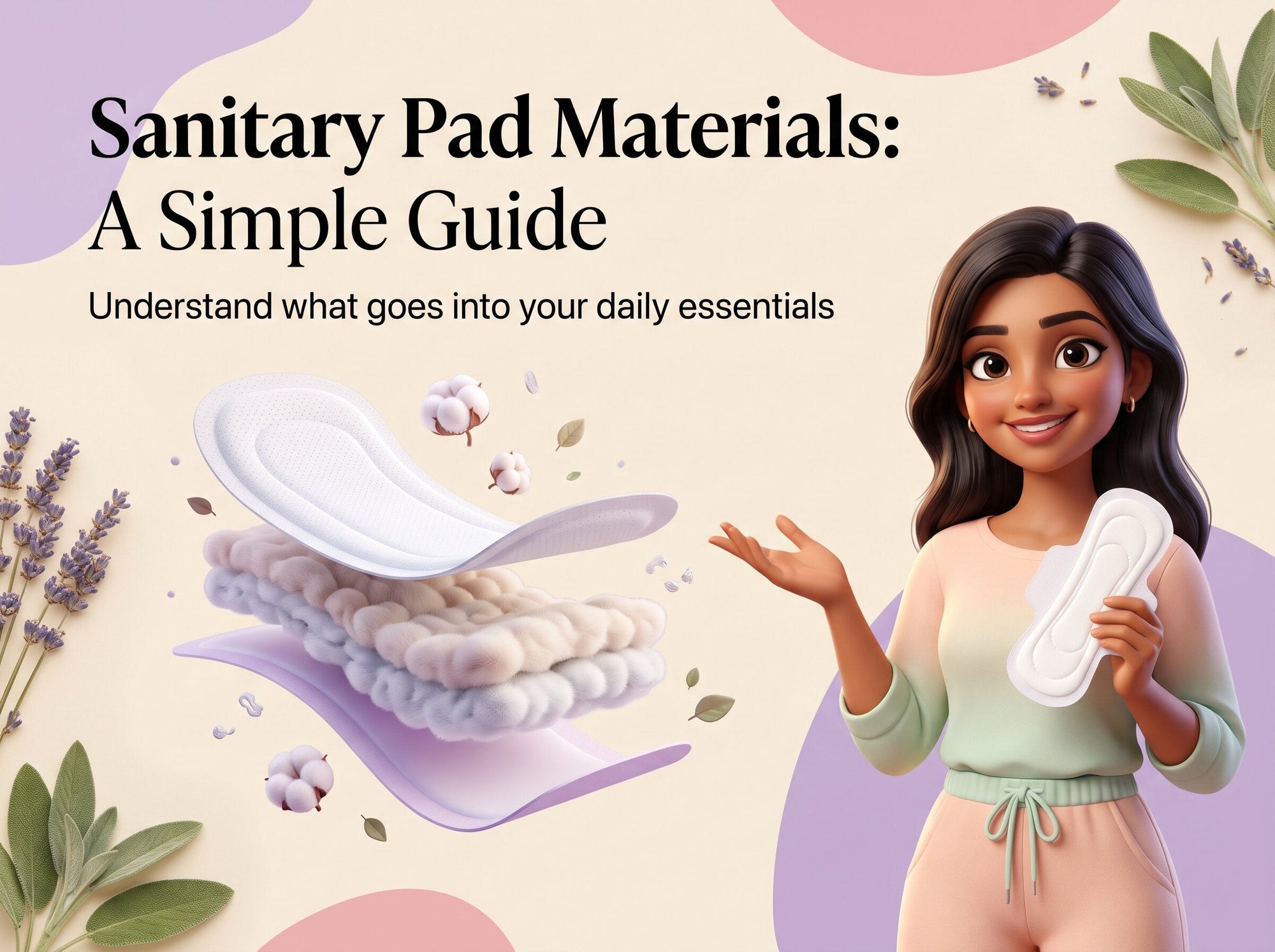
A pad is easiest to explain as something useful and ordinary, like a bandage.
The simple version
"A pad is a soft, thin cushion that goes inside my underwear. When the blood comes out, the pad soaks it up, so my clothes stay clean and dry. It's like a bandage, but for something that happens inside the body."
If he asks, "How does it stay on?"
"There's a sticky strip on the back that holds it in place. I peel it off the wrapper and stick it to my underwear."
If he asks, "Does it hurt?" or "Do you have to change it?"
"It doesn't hurt. I change it a few times a day, just like you change your clothes when they get dirty. The used pad gets wrapped up and goes in the dustbin."
If he laughs or says it's weird
"Pads help girls and women go to school, play, and work even during their period. They're a useful thing, like a raincoat or a helmet."
Other questions he's likely to ask
These come up most often, usually at unexpected moments. Keep your answers this short.
"Why do you feel unwell?"
"My body is having its period this week. My tummy hurts a little and I feel tired, so I need some rest. I'll be fine in a few days."
"Is that blood? Are you hurt?"
"Yes, it's blood, but I'm not hurt. It's normal and healthy. Every woman's body does this. Your Dadi, Nani, and Masi all did, and one day your sister or friends will too."
"Will I get it too?"
"No, boys don't get periods. But it's important for you to know about them, because many girls and women in your life have them."
Teaching respect: the no-teasing rule
Once he knows what a period is, make one family rule clear: periods are never a joke.
Tell him directly: "If a girl in your class has her period, or a friend makes a joke about it, we never laugh. We're kind about it."
Then give him words to use, because kids often tease simply because they don't know what else to say. A short line works well: "That's not funny. It's just a body thing."
If you ever hear him laugh or make a face, don't scold. Calmly ask, "What do you think that's about?" and then remind him what the period is. Most of the time, a little shared understanding fixes it.
How he can help when you're not feeling well
Give him a real job. Looking after family is a life skill every child should learn, and period days are a simple, natural time to practise it.
If he asks, "What can I do to help?"
Don't say "Nothing, beta." Try this instead:
"That's so kind of you. You can bring me my heat pad, get me a glass of warm water, or just sit with me for a few minutes. That helps a lot."
Small things he can do
• Bring a heat pad or hot water bag. Explain why: "Heat relaxes the muscles in my tummy and eases the cramps."
• Get you warm water or a cup of tea.
• Make the room calm. Dim the lights or turn the TV volume down.
• Fetch a blanket or pillow.
• Take over one small chore, like setting the table or putting his toys away without being reminded.
• Sit with you quietly. He can read, draw, or watch something calm next to you.
Let him know when you need space
"Sometimes I might want to be alone and rest. That's okay. It doesn't mean I'm upset with you. My body just needs a break."
This teaches him that caring for someone also means respecting what they need, even when that's quiet.
Thank him properly
Say it specifically: "Thank you, the heat pad really helped." Specific thanks teaches him that his actions matter, far better than any lecture.
Keeping the conversation going
One big sit-down talk rarely works. Small, repeated moments do.
Make it a conversation, not "the talk"
Mention periods casually in the car, when he asks a question, or when something comes up on TV. Each time he learns a little more, and each time it feels less awkward. By the time he's 11 or 12, it will feel like something you've always talked about.
Involve his dad
When a boy sees his father talk about periods calmly, without jokes or embarrassment, that is the strongest lesson he can get. If you can, ask his dad to take part in a conversation or answer a question himself.
When you don't know the answer
Say, "Good question. Let me find out and tell you tomorrow." Then actually do it. You don't need to know everything. What matters is that he learns he can always bring his questions to you.
Quick takeaways
• Answer only what he asks, simply and honestly
• Use real words, with a calm face and voice
• Explain a period with the uterus and the lining, and skip the baby part for now
• Explain a pad as a soft cushion that keeps clothes clean, like a bandage
• Don't hide pads or whisper about periods
• Make "no teasing" a family rule, and give him a line to use
• Give him real ways to help, and thank him specifically
• Keep the conversation going in small moments, and involve his dad
You don't need to be an expert. You just need to be honest, calm, and willing to answer. A child who grows up with that becomes an adult who makes the world a little easier for every woman around him.