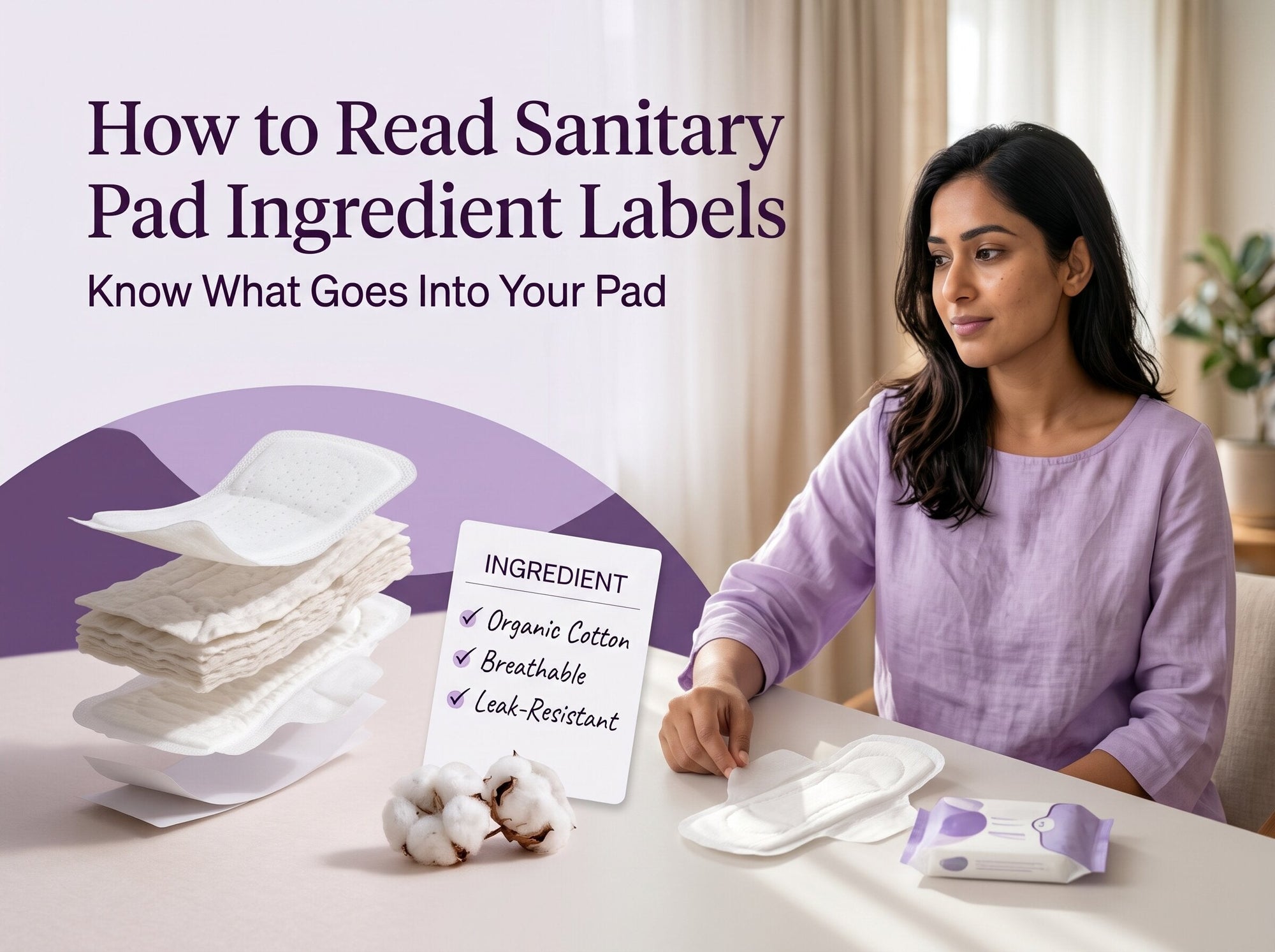




When you pick up a pack of sanitary pads, the material description can sound confusing. One product highlights cotton, another mentions a soft top sheet, and another focuses on absorbency or leak protection. But a sanitary pad is not made from just one material. It is a layered product, and each layer has a different job.
Understanding these materials can help you compare products more clearly. It does not mean that one material is automatically better for everyone. Comfort and performance depend on the complete design, your flow, fit, how often you change the pad, and your own preferences.
This simple guide explains the main parts of a disposable sanitary pad, the materials that may be used in each part, and what those differences mean in everyday use.
What Are the Main Parts of a Sanitary Pad?
Many disposable pads have three main functional sections: a top sheet, an absorbent core and a leak-resistant backing. Some designs also include a transfer or distribution layer, adhesive, release paper and individual wrapping. The exact construction varies by manufacturer and product.
UNICEF’s technical specifications describe disposable pads as having a top layer, absorbent material and leak-proof layer, with possible additional components such as a transfer layer and adhesive. These are design descriptions, not a claim that every pad uses the same materials.

1. Top Sheet: The Layer Closest to the Skin
The top sheet is the surface that sits closest to the body. Its job is to let menstrual fluid pass through toward the absorbent layers underneath while providing a comfortable contact surface.
Depending on the product, this layer may use cotton, viscose/rayon, or manufactured fibres such as polyester, polyethylene or polypropylene. Some top sheets are woven; others are non-woven. A soft feel alone does not identify the exact fibre, so check the product’s material information if the composition matters to you.
People can respond differently to texture, friction, moisture and added fragrance. If a pad repeatedly causes irritation, stop using it and consider a different product. Persistent or severe symptoms should be discussed with a qualified healthcare professional.
2. Transfer or Distribution Layer: Moving Fluid Along
Some pads include a layer between the top sheet and the absorbent core. It helps move fluid away from the surface and distribute it across the absorbent area. Not every product describes this layer separately, and its design can vary.
The purpose is functional: help the pad take in fluid and use its absorbent area. The presence or absence of a separately named transfer layer does not, by itself, tell you whether a pad will work well for your flow.
3. Absorbent Core: Holding the Menstrual Flow
The absorbent core is the part designed to take in and retain menstrual fluid. It may contain cellulose-based materials such as wood pulp or other cellulose fibres, cotton, superabsorbent polymers (SAPs), or a combination of materials.
Superabsorbent polymers can help a pad hold fluid while keeping the product relatively thin. Cellulose fibres also contribute to absorption and structure. Product designs differ, so avoid assuming that all pads contain the same core or that a particular ingredient automatically determines comfort or safety.
Absorbency depends on the core as well as the pad’s size, shape, construction and distribution of materials. Choose a product that suits your flow and follow the instructions on the pack.
4. Leak-Resistant Backing: Helping Protect Clothing
The backing is the layer on the underside of the pad. It helps prevent menstrual fluid from passing through to underwear. Disposable pads may use a thin polymer film, such as polyethylene or polypropylene, or another material designed to provide a barrier.
A leak-resistant backing is one part of the pad’s overall performance. Fit, placement, absorbency and changing the pad when needed also matter. A pad should not be worn beyond the product’s recommended use instructions.
5. Adhesive, Wings and Release Paper
Many disposable pads have adhesive on the underside to help keep the pad in place. Wings may wrap around underwear to improve positioning. A removable release liner protects the adhesive before use.
These small components are easy to overlook, but they are part of the complete product. Their materials and arrangement vary. If you are trying to understand the whole pad, do not focus only on the skin-contact surface.
6. Wrapper and Packaging
Individual wrappers and outer packaging help keep pads clean before use and make them easier to carry. Packaging may use paper, plastic or a combination, depending on the brand and product.
A claim about the pad itself does not necessarily describe its wrapper or outer pack. If packaging material or waste is important to your choice, look for a specific statement about packaging rather than assuming it follows the same material claim as the pad.
Cotton, Cellulose, Rayon and Synthetic Fibres: What Do These Terms Mean?
Cotton is a natural plant fibre. Cellulose is a structural material found in plants and is used in products such as paper and absorbent fibres. Rayon or viscose is a manufactured fibre made from cellulose. Synthetic fibres such as polyester, polyethylene and polypropylene are manufactured materials used in different product components.
These terms describe different things; they are not interchangeable. For example, a pad may use cotton in its top sheet and other materials in its core or backing. A product described as cotton-based is not necessarily made entirely from cotton, and cotton does not automatically mean organic.
For a closer comparison of cotton and synthetic pad surfaces, read CambioWoman’s existing article: Cotton Sanitary Pads vs Synthetic Pads: What Should You Compare?
Does One Material Make a Pad Better?
Not on its own. A material’s role and the way the complete pad is designed are more useful than a broad label. Cotton may appeal to someone who prefers its feel, while other materials may be selected for fluid transfer, absorbency, flexibility or leak protection.
No single material guarantees that a pad will be comfortable, irritation-free, fully absorbent or suitable for every person. If you are comparing products, consider the full construction, your flow, the fit, fragrance information, and how the pad feels during use.
You can also read CambioWoman’s guide to Organic Sanitary Pads vs Regular Sanitary Pads for a separate discussion of organic claims and product differences.
A Simple Checklist Before Buying Sanitary Pads
- Check whether the product identifies the top-sheet material.
- Look for information about the absorbent core and leak-resistant backing, not only the surface layer.
- Choose a size and absorbency that suit your flow and routine.
- Check whether the product is scented or contains deodorant if you prefer to avoid those additions.
- Read claims carefully; words such as cotton, organic, natural or plastic-free may refer to specific components rather than the entire pad.
- Review the pack instructions and change the pad as recommended.
- If product details are unclear, ask the seller or manufacturer rather than guessing.
Where to Explore Menstrual Care Options
If you are comparing materials and want to review a specific product, read its current product description and check which components are identified. Do not assume that one material description covers every layer.

You can explore CambioWoman’s Organic Cotton Pads and browse the Menstrual Hygiene Products collection. Check the current product page for the exact material details and claims.
For more educational context, see How to Choose Organic Sanitary Napkins.
Frequently Asked Questions
What materials are sanitary pads made of?
Disposable pads commonly have a top sheet, absorbent core and leak-resistant backing. Depending on the product, materials may include cotton, cellulose or wood pulp, viscose/rayon, manufactured fibres, superabsorbent polymers, adhesives and a barrier film. The exact composition varies by product.
What is the top sheet of a sanitary pad?
The top sheet is the surface closest to the body. It is designed to allow menstrual fluid to pass into the absorbent layers while providing a contact surface. It may be made from cotton, viscose/rayon or manufactured fibres, depending on the product.
What is inside the absorbent core of a pad?
The core may contain cellulose-based fibres, wood pulp, cotton, superabsorbent polymers or a combination. Its job is to absorb and retain fluid. Check the product’s information for its specific construction.
Are all sanitary pads made with plastic?
Materials vary across products and layers. Some disposable pads use polymer-based materials in the top sheet, backing, adhesive system or packaging, while other components may be cellulose-based. Do not assume a product is entirely plastic-free without clear product-specific information.
Does cotton mean a sanitary pad is organic?
No. Cotton identifies a fibre; organic refers to how a relevant material is produced and verified under a particular standard. Check the exact claim and what component it applies to.
Is a cotton sanitary pad always better for sensitive skin?
Not necessarily. Individual comfort can depend on material, fit, friction, moisture, fragrance and other factors. If a product repeatedly causes irritation, stop using it and seek medical advice if symptoms persist.
Why do sanitary pads have a leak-resistant backing?
The backing helps prevent fluid from passing through to underwear. Overall leak protection also depends on absorbency, pad shape, fit, placement and changing the pad when needed.
Conclusion
A sanitary pad is a layered product, and the materials in each layer have a specific function. The top sheet provides the contact surface, the transfer layer may help distribute fluid, the core absorbs and retains it, and the backing helps protect clothing. Adhesives, wings and packaging also form part of the complete product.
Instead of choosing a pad based on one material word, look at the full construction and the product’s instructions. Clear information, suitable absorbency, a comfortable fit and your own experience are more useful guides than broad claims.
Sources & References
- UNICEF Supply Division — Technical Specifications for Disposable Sanitary Pads
- UNICEF Supply Division — Technical Specifications for Reusable Menstrual Pads
- Review — Menstrual products as a source of environmental chemical exposure: A review from the epidemiologic perspective
- EDANA — Menstrual Pads and Liners: Components breakdown