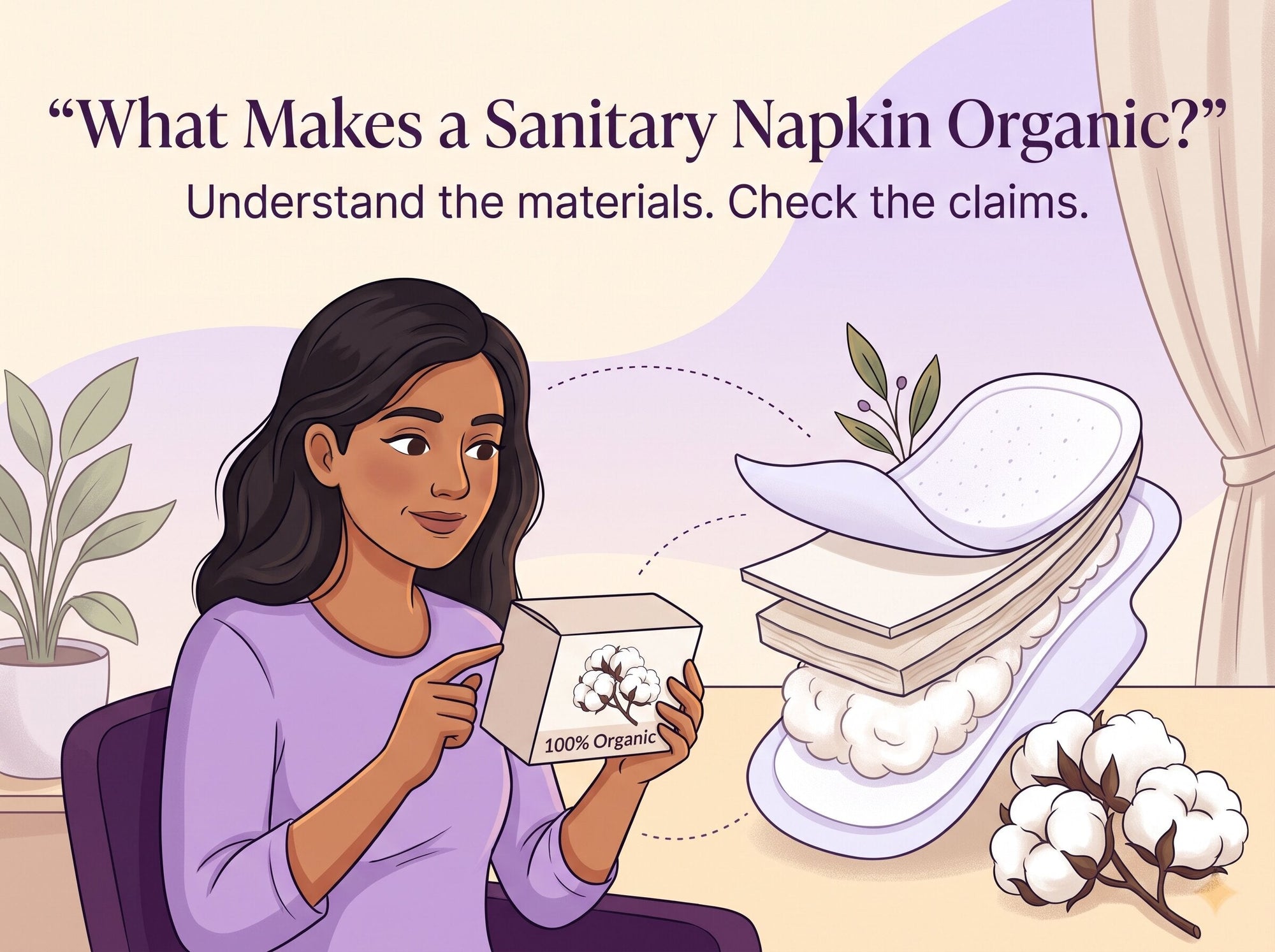



Words such as cotton, organic, bamboo and plant-based often appear in conversations about period products. But what do they actually mean when you look inside a sanitary napkin? Is a pad made from a natural material from top to bottom, or does each layer use something different?
The answer starts with understanding how a disposable sanitary napkin is built. A pad is not one single sheet of fabric. It is a layered product, and each layer has a specific role: to sit against the body, move fluid into the absorbent section, hold that fluid, help prevent leaks and keep the pad in place.
This guide looks at the natural and plant-derived materials that may be used in sanitary napkins, explains how some materials are processed, and shows why the word “natural” does not describe every part of a finished pad.
First, what does “natural material” mean?
In everyday language, a natural material usually means a material that comes from a plant, animal or mineral source. In product construction, however, the source of a raw material and the way it is processed both matter. Cotton is a natural plant fibre. Cellulose is a substance found in plants. Viscose is made by dissolving and regenerating plant-derived cellulose into a manufactured fibre. These materials have different classifications even though they can all have a plant connection.
That distinction is important. “Plant-derived” does not necessarily mean “unprocessed”, “chemical-free”, “organic”, biodegradable in every disposal setting or environmentally preferable. Those are separate claims that need their own evidence.
How a sanitary napkin is structured
A disposable pad commonly contains several functional layers. UNICEF’s technical specification describes a top layer that touches the body, a transfer layer, an absorbent material, a leak-proof bottom layer and an adhesive system that attaches the pad to underwear. The exact materials and construction can vary by manufacturer and product.
The following sections explain where natural or plant-derived materials may fit into that structure.
1. Cotton: a natural fibre often used in the top sheet
Cotton is a plant-based natural fibre. In sanitary napkins, it may be used in the top sheet—the surface that comes into direct contact with the body. A cotton top sheet can offer a familiar, fabric-like feel, which is one reason the material is often highlighted in product descriptions.
However, a pad described as a cotton pad does not automatically contain cotton in every layer. The absorbent core, backing, adhesive and release liner may be made from other materials. The most accurate description identifies which component contains cotton and whether the cotton is conventional or certified organic.
2. Cellulose and wood pulp: plant-based absorbent materials
Cellulose is a structural substance found in the cell walls of plants. It can be sourced from wood pulp or other plant material and processed into fibres or absorbent sheets. Cellulosic material is commonly used in the absorbent section of disposable sanitary pads because it can take up and hold liquid.
Cellulose is a broad material category, not a guarantee that a product is made from a particular tree, is unbleached, or is fully biodegradable in the conditions where it will be discarded. Product documentation would need to identify the source and processing details before those claims can be made.
3. Viscose or rayon: plant-derived, but manufactured
Viscose, also known as rayon in some markets, is a regenerated cellulosic fibre. It begins with cellulose obtained from plant sources such as wood pulp or cotton linters. The cellulose is processed into a solution and then regenerated as fibre. Textile Exchange describes viscose/rayon as an artificial textile material made from regenerated and purified plant-derived cellulose.
This means viscose is not the same thing as an unprocessed natural fibre like cotton. It is better described as a manufactured or regenerated cellulosic fibre. It may be used in absorbent or fluid-handling materials, depending on the product design. Its properties and environmental impacts depend on the raw material, manufacturing process and production controls.
4. Bamboo-derived materials: check what “bamboo” means
Bamboo is a fast-growing grass, but a product labelled with the word bamboo may not contain mechanically extracted bamboo fibre. Bamboo can be processed into a natural bast fibre, or it can be converted into regenerated fibres such as bamboo rayon/viscose or lyocell.
The Council of Fashion Designers of America explains that most bamboo textile products are made through a rayon-type process rather than from mechanically processed bamboo fibre. This is a useful reminder to look for the precise fibre name in a product’s material declaration. “Bamboo-derived rayon” is more informative than simply saying “bamboo” when the material has been regenerated.
Do not assume that bamboo-derived automatically means more sustainable, antibacterial or safer for skin. Those claims depend on evidence about the finished material and its manufacturing—not just the plant it started from.
5. Plant starches and other bio-based components
Some period-product descriptions refer to plant starches or other bio-based materials. Depending on the product, these may be used in films, binders, packaging or other components rather than as the main skin-contact surface or absorbent core. The phrase “plant-based” alone does not tell you which component contains the material or what proportion of the finished product it represents.
If a brand makes a specific claim about a starch-based film or a plant-derived component, look for the exact component name, its function and the proportion or scope covered by the claim. Do not assume that one plant-based component makes the entire pad plant-based.
6. What about the layers that may not be natural?
A pad can combine natural or plant-derived materials with manufactured materials. UNICEF’s technical specification lists possible top-layer materials such as cotton, viscose/rayon, polyester, polyethylene and polypropylene. It also describes cellulosic absorbent material, the possible use of super-absorbent polymers to improve absorbency and thinness, and plastic materials for the leak-proof layer.
Adhesives and release liners also play a practical role: they help keep the pad in place and protect the adhesive before use. These components may not be made from natural fibres. Their presence does not by itself tell you whether a pad performs well or suits a particular person; it simply shows why a complete material breakdown is more useful than a single headline claim.
For a closer look, compare cotton and synthetic pad materials.
A quick map: materials and where they may be used
| Material | How it is classified | Possible role in a pad |
|---|---|---|
| Cotton | Natural plant fibre | May be used in the skin-contact top sheet |
| Cellulose / wood pulp | Plant-derived material | May form part of the absorbent section |
| Viscose / rayon | Regenerated cellulosic fibre | May be used in top or absorbent materials, depending on design |
| Bamboo-derived rayon / lyocell | Regenerated fibre made from bamboo-source cellulose | May be used as a manufactured cellulosic fibre |
| Plant starch-based material | Plant-derived polymer or ingredient | May be used in selected films or components; check product-specific details |
| Polyethylene / polypropylene / polyester | Synthetic materials | May be used in top sheets, backing or other functional layers |
| Super-absorbent polymer | Manufactured absorbent polymer | May be blended into an absorbent core in some designs |
Natural, organic, plant-derived and biodegradable are not the same
These terms are often used close together, but they describe different things:
- Natural describes a source or material category; it does not identify the exact processing method.
- Plant-derived means a material originates from plant feedstock. It may still undergo substantial manufacturing.
- Organic refers to how a relevant agricultural material was produced and whether it meets a defined standard. Check which component is covered.
- Biodegradable describes a material’s ability to break down under specified conditions. It does not mean it will disappear quickly in every landfill, drain, soil or water environment.
- Plastic-free is a claim about the presence or absence of plastic in the specified product or packaging. It should be supported by a complete material breakdown.
A product can contain organic cotton in its top sheet and still use other materials in its core or backing. Likewise, a plant-derived fibre is not automatically organic, and a biodegradable claim should not be inferred from the word natural.
For further context, understand organic versus regular sanitary pads.
How to read a sanitary napkin’s material description
When a product page or package uses a material claim, look for these details:
- Which layer is being described—the top sheet, absorbent core, backing, adhesive or packaging?
- Is the material named precisely, for example cotton, cellulose, viscose/rayon or polyester?
- If the word organic appears, does the claim apply to the cotton or to the complete finished product?
- If bamboo is mentioned, is the fibre mechanically processed bamboo or bamboo-derived rayon/viscose/lyocell?
- Are biodegradability, compostability or plastic-free claims tied to a named component and a stated test or standard?
- Can the brand provide a material declaration or certification details when asked?
If the product description only says “natural”, “eco-friendly” or “plant-based” without identifying the component, it is reasonable to ask the manufacturer for more detail.
Where CambioWoman’s product information fits
CambioWoman’s Organic Sanitary Pads product page describes an organic cotton top sheet. That is a specific claim about the skin-contact layer; it should not be expanded into a claim that every layer of the pad is cotton or organic unless the brand’s current technical documentation confirms that. Review the live product page for the latest composition, available sizes and supporting documentation.
Explore the product details here: CambioWoman Organic Cotton Pads.
Frequently asked questions
What natural materials are used in sanitary napkins?
Depending on the product, natural or plant-derived materials may include cotton, cellulose from plant pulp, and fibres regenerated from plant-derived cellulose such as viscose/rayon or bamboo-derived rayon. The exact materials vary by brand and by pad layer.
Is cellulose a natural material?
Cellulose is a naturally occurring substance found in plants. When it is processed into pulp, sheets or regenerated fibres, the resulting material has undergone manufacturing. The source and the form of the cellulose should be distinguished.
Is viscose the same as cotton?
No. Cotton is a natural plant fibre. Viscose is a manufactured, regenerated cellulosic fibre made from purified cellulose derived from plant sources.
Are bamboo sanitary pads made from real bamboo fibre?
Not necessarily. Bamboo may be mechanically processed into fibre, or its cellulose may be converted into regenerated fibres such as rayon/viscose or lyocell. Check the precise fibre description.
Does natural mean biodegradable?
No. Natural origin does not guarantee biodegradability in every environment. Processing, blends, adhesives, backing materials and disposal conditions all matter.
Are all layers of an organic cotton pad made from organic cotton?
Not automatically. The organic cotton claim may apply only to a specified component, such as the top sheet. Check the full product composition and the scope of any certification.
Why do sanitary napkins combine different materials?
Different layers perform different jobs, including skin contact, fluid transfer, absorption, leak resistance and attachment to underwear. A combination of materials can be used to meet those functional requirements.
Final thoughts
Understanding the materials in a sanitary napkin means looking beyond a single word on the pack. Cotton, cellulose, viscose and bamboo-derived fibres all have different origins and processing routes. A pad may combine these with synthetic materials to perform the separate jobs required of each layer.
The clearest product information names the material, identifies the layer it belongs to and explains the scope of any organic, plant-based or environmental claim. When those details are available, you can make a more informed decision without relying on broad labels.
For separate practical buying advice, read How to Choose Organic Sanitary Napkins.